

Driving with Joe Overholt
The legacy of a man who left nothing but friendship — he was impossible to forget, impossible not to love

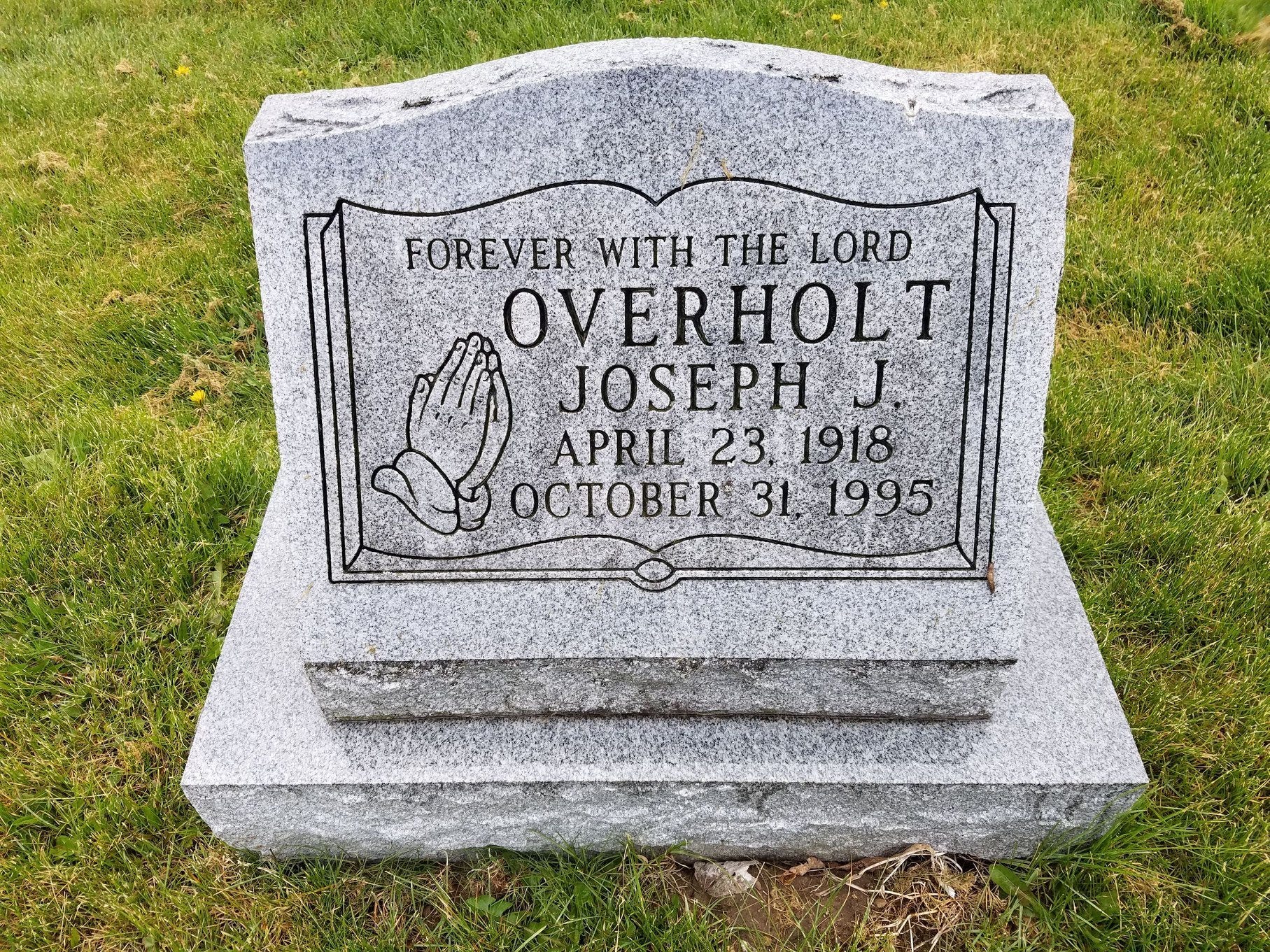
I.
IN THE GOSPEL of Luke, there’s a story about two sisters, Mary and Martha.
Martha was the producer, the manager, the one who got things done. She bustled around the room, preparing the meal, pouring the wine, and making sure everything ran smoothly. But Mary sat quietly at Jesus’s feet, soaking in his presence.
When Martha complained that Mary wasn’t helping, Jesus defended her: “Mary has chosen what is better, and it will not be taken away from her.”
Yet both women were crucial. After all, Jesus needed a meal, a glass of wine, and a place to stay overnight. But it is clear that what Jesus enjoyed most was Mary’s presence. He valued her friendship, so much that she was one of the two women permitted to announce his resurrection.
I think about that story when I remember Joe Overholt and his twin brother John.
II.
WHEN I WAS in first grade, I sat in the front seat of the school bus, just behind Joe Overholt, who in addition to teaching high school, also drove the students home after school.
My family called me Question Box. I’m sure Joe must have gotten tired of me—my endless questions, my excitable observations about the world passing outside the window, my inane stories about my family, or whatever else crossed my six-year-old mind.
But this kind, gentle man never showed a trace of impatience.
He just kept saying, “Is that so? Is that so?”
That’s what friendship sounds like when you’ve learned to abide with people.
Patient, unhurried, fully present.
III.
WITHIN OUR COMMUNITY, Joe Overholt was an authentic individual. He lived a life which broke all the rules. He was a traveler, a lover of learning, and a musician.
Someone once told me that Joe Overholt spoke eight languages fluently, and could understand twelve.
He never married, and thus had no children. He left behind no legacy—he never published any of the books he started. He spent his retirement funds on lost causes, ending his life penniless, scratching to feed the many dogs who loved him and lived in and around his house.
Yet hundreds of people attended his funeral in Hartville, Ohio. And the affectionate anecdotes told about him could fill a book.
I remember one summer when Joe joined the Hartville Singers, our church chorus, for the annual tour. Our director, John Henry Miller, was Joe’s nephew and regarded him with a singular combination of wry amusement and awe. I couldn’t figure out why.
Until the last evening of the tour. We arrived late to our home church for the climactic concert. We had no time to change, we just had to go straight from the bus into the sanctuary. Pacing in line, I saw Joe do something that startled me.
As we got closer to the packed auditorium thundering out a hymn, Joe whipped out his comb, dipped it into a muddy puddle, and drew it through the steel-gray locks of his hair. He caught my startled look and smiled boyishly, then quickened his steps toward the church door.
His smile released a moment of charm. At that point, Joe was sixty years old, yet that glimpse infused him with a dazzling charisma that made him seem forty years younger.
IV.
BUT JOE WAS also a broken man.
He once shared an awkward story with us younger guys about his need for sex, how his high school students flirted provocatively with him, and how he wished he would have gotten married while Mennonite women were still attracted to him. He struggled to make ends meet, his clothes were rumpled and fit awkwardly, and his aging sisters sometimes had to step in to do his laundry or make sure he was eating well.
I knew he wrestled with his faith—he didn’t try to hide this. I remember hearing about people visiting our Conservative Mennonite church at night and hearing Joe in the sanctuary alone, crying out to God. He had a mystical faith that no one quite understood.
Today, knowing that faith is the opposite of certainty, I wonder. Perhaps what they heard and what we saw was simply friendship—a man like Job who questioned God, a man who had learned to dwell with God in the same way the patriarch Abraham did, a man who enjoyed sitting and enjoying the presence of Jesus, just as Mary did.
Not performing, not producing. Just being present.
IV.
JOE HAD A twin brother, whose name was John. Born in 1918, the brothers competed fiercely all their lives.
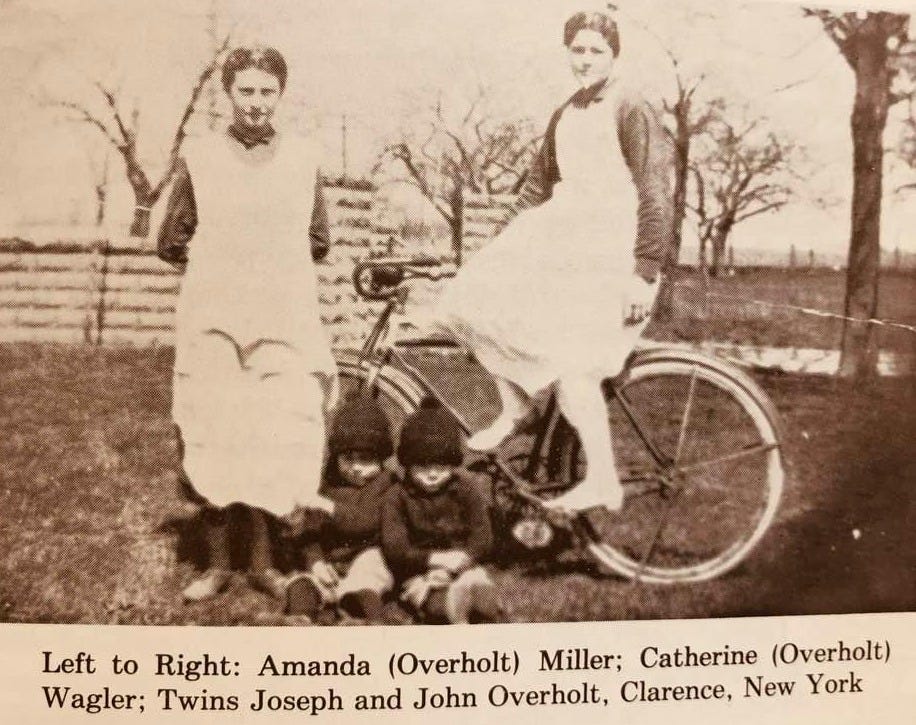
When I interviewed John Henry by phone in December 2007 for the original article, he told me the brothers grew up near Norfolk, Virginia, die-hard coon hunters in the swamps. But then fate stepped in. “Joe had rheumatic fever and was a little more sickly. John was the tough one. But Joe was favored in a way. John felt like the ‘elder brother.’”
The Elder Brother—the responsible one in the Prodigal Son story, the one who stayed home and did everything right, the one who was forgotten while his wayward brother was celebrated.
VI.
JOHN WAS THE more productive of the two twins, leaving a financial and spiritual legacy to his family.
John was chosen by lot to be an ordained minister at Hartville Conservative Mennonite Church. He raised a fascinating family—charisma and talent runs in the blood. He compiled one of the most important songbooks within the Conservative Mennonite world: The Christian Hymnary, privately published in 1972.
As a child, I heard my mother tell us about the sacrifices the family made so that John could spend the time needed to finish the book. To support his family and his dreams, John created a business hauling produce up and down the East Coast. He lived by faith.
That faith was real—forged under the pressure of feeding five children, paying bills, creating something lasting. A friend of mine from our church, Greg Yoder, who sometimes accompanied John, told me about one night when the truck broke down. They were trying to fit the hose into the right place, and it simply wouldn’t go. “I saw John pause and bow his head. And then, unbelievably, the hose went in.”
John’s relationship with God was real. But it was forged in motion, in the frenetic pace of productivity and responsibility.
In the midst of this restless lifestyle, John created his greatest musical piece.
VI.
THE HAUNTING SONG “I Will Abide” — a piece drawn directly from the Psalms — comes out of John’s personal experience.
The song was written in 1965, just as his conflicts with the ministry at Hartville Conservative Mennonite Church were coming to a head. He would be silenced approximately a year later “for being too adamantly conservative in his faith and practice,” according to my friend John Fohner.
I can still see and hear John’s family perform this song with slow, methodical grace. Above the four-part harmony, Vera’s voice floated light and clean following the high obligato line, a stunning feature that John must have written to display her exceptional voice.
I will abide in thy dwelling place forever
I will thee trust and e’re thy covert claim
The song came to John as he drove a truck, alone for long hours on the road, torn by debt-worries, just an entrepreneur trying to make a living. What must it have been like, criticized by his community, misunderstood? The song is John’s answer to his fears.
I find the song a haunting memory, a cry for understanding. What did it sound like as John first heard it in his head above the roar of his recalcitrant 18-wheeler as it barreled up the East Coast, the refrigerated trailer loaded with boxes of fruit?
For thou oh God hast heard me, thou hast given
The heritage of those that fear thy name.
John’s children needed to eat. They needed clothes and a roof over their heads. They were bright and required more attention than he had time to give. The father must have been worried about how to manage everything.
Hear my cry, O God, attend unto my prayer
From the end of the Earth to thee I cry
I don’t understand what it’s like to be an Amish-Mennonite preacher who has just been silenced or one who has a dream to create a hymnal, or one who wants to reshape the Church of Jesus Christ into God-fearing people who dress in plain clothes. But I do understand the power of hope.
When my heart’s o’erwhelmed, lead me to the rock that’s higher
Lead me to the rock that is higher than I.
And thus, John’s yearning for a better future now sticks in my head.
This was John’s cry: productive, responsible John who was doing everything right but still felt overwhelmed. His relationship with God was genuine, but it was the cry of someone who desperately wanted to abide but barely had time to stop long enough to do it.
John created this song. It came out of his productivity, his striving, his wrestling with an overwhelming life, his artistic work squeezed between all the work he had to do.
But Joe? His approach was different. Other than the albums he produced, Joe wasn’t all that good at creating stuff. He relied on the kindness of strangers and friends all his life.
Yet Joe inhabited that song. His life was a commitment to the relationships he built with others. He knew how to build friendships—with God and with people.
Because friendship requires the ability to abide.
John Overholt’s children and grandchildren, along with some of his relatives, sing his most powerful song: “I Will Abide.”
VII.
DRIVING WITH JOE was an experience in itself. My youngest brother Richard remembers an evening back in the day when he and our siblings Tim and Heidi—who performed as The Denlinger Trio in various churches at the time—had the honor of driving with Joe.
